


IC-1 / IC-1 Plus
The Tadano IC-1 control system, enhanced with IC-1 Plus, combines intelligent crane control, real-time monitoring, and advanced safety technologies to maximize lifting performance, precision, and operator confidence.
IC-1
The Tadano IC-1 control system sets the benchmark for safe, intuitive, and precise crane operation. Designed according to EN 13000 and ASME B30.5 standards, it combines the functions of a Rated Capacity Limiter (RCL) with a highly advanced operational interface.
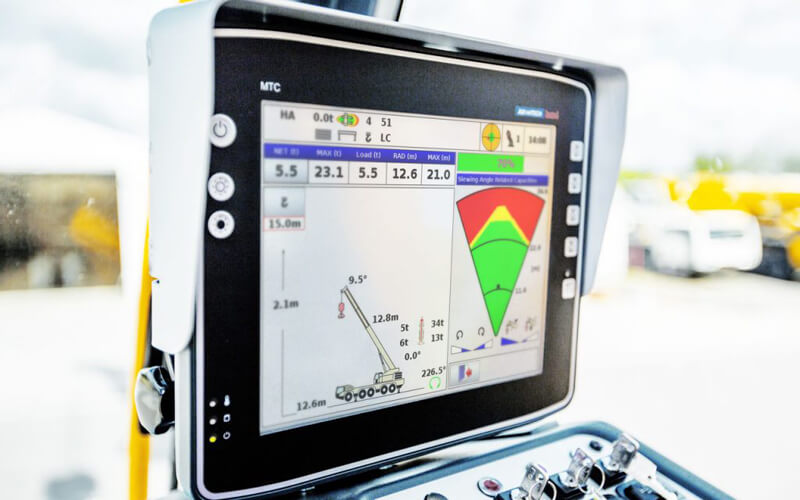
Displayed on a large, color touchscreen, operators can monitor all critical crane and load data in real time, including load charts, slewing angle, boom length, outrigger pressures, and counterweight configuration. Clear, intuitive graphics ensure safety-critical information remains easy to read and understand, even in demanding working conditions.
IC-1 Plus
IC-1 Plus further enhances safety and productivity by calculating lifting capacity in real time for every slewing position, boom angle, and outrigger configuration. Unlike conventional systems that rely on pre-calculated 360° lifting charts, it continuously determines the available lifting capacity throughout the crane’s working range.
This enables operators to utilize the crane’s full potential—particularly when lifting over outriggers—while always remaining within the crane’s operating limits.
FLEX BASE
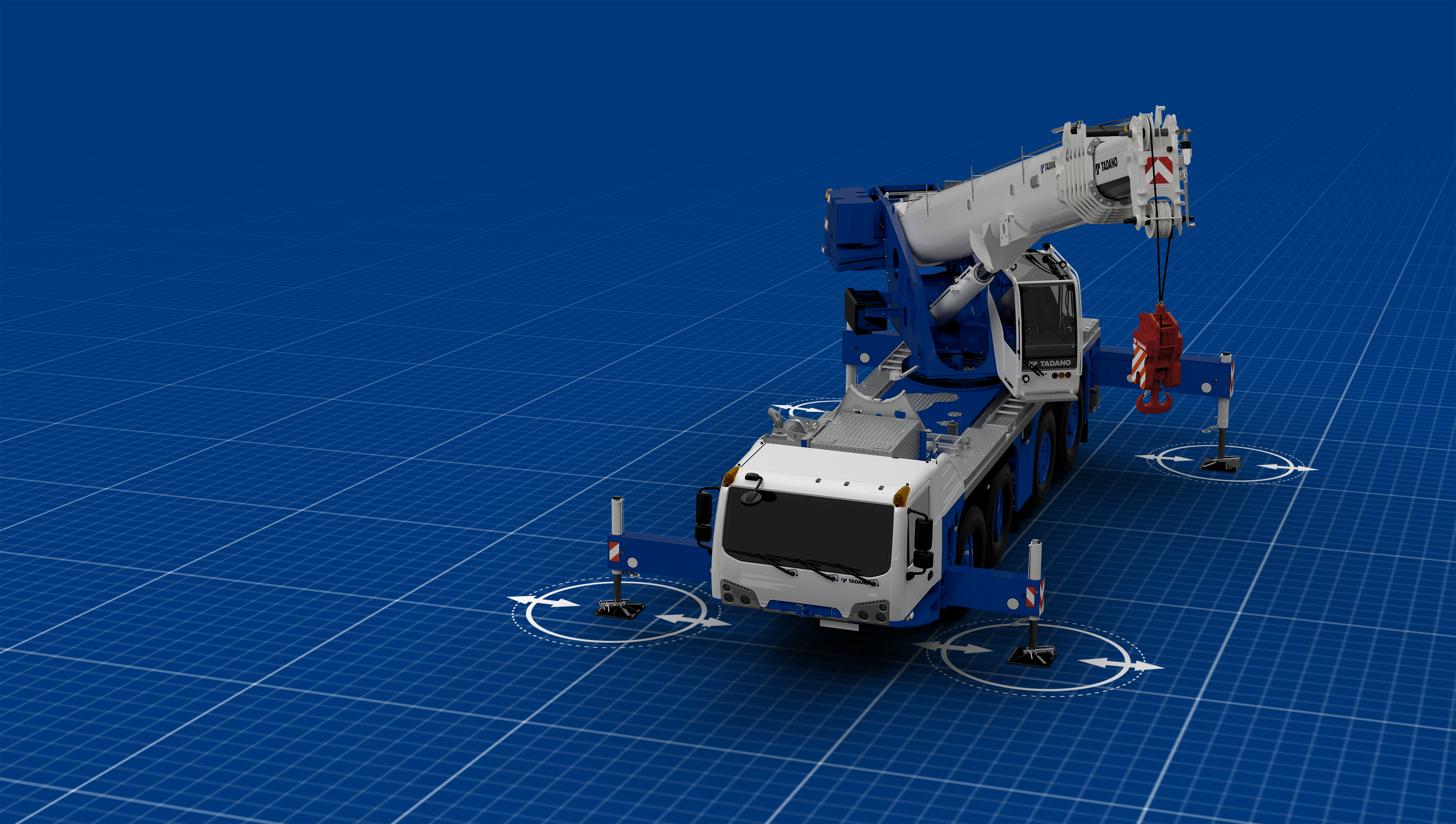
Flex Base allows outriggers to be extended to any length within their operating range, including asymmetrical configurations. Every centimeter of outrigger extension is incorporated into the lifting capacity calculation, enabling reliable crane operation in confined spaces without compromising performance.
Capacity Radar
The Capacity Radar provides a clear visual indication of the crane’s operating status by displaying green, yellow, and red safety zones on the IC-1 display. As the load approaches the maximum permitted capacity, crane movements are automatically slowed before the system safely stops operation to prevent overloads and uncontrolled load movements.
Working Range Limitation
Working Range Limitation allows operators to define operating limits for slewing angle, maximum lifting height, boom length, and load radius. A configurable virtual wall can also be created to prevent the crane from entering restricted areas.
These functions help protect nearby personnel, surrounding structures, and equipment, making them particularly valuable on urban or congested job sites.
Automatic Outrigger Levelling
Automatic Outrigger Levelling ensures the crane begins every lift from a stable and level foundation. At the push of a button, the system automatically adjusts each outrigger until the crane is perfectly level, reducing setup time while minimizing the risks associated with uneven crane positioning.
Automatic Counterweight Rigging
Automatic Counterweight Rigging reduces the need for manual handling of heavy counterweight slabs by guiding operators through the rigging process step by step. The system verifies the correct counterweight configuration and prevents crane operation if an unsafe setup is detected.
Outrigger Base and Pressure Monitoring
Outrigger loads and extension lengths are continuously measured using potentiometer-powered cable drums or linear measurement on the horizontal cylinders. This ensures the crane is configured as intended before lifting operations begin.
If an incorrect outrigger base selection is detected, the IC-1 system intervenes before lifting can continue.
Counterweight Detection
Counterweight Detection continuously monitors the condition of the counterweight cylinders to verify that the correct counterweight configuration is installed. If an incorrect setup is detected, the system informs the operator before lifting operations proceed.
Hook Height Indication
Hook Height Indication helps operators avoid collisions between the hook and surrounding structures or equipment during lifting operations.
On-board Diagnostics
Tadano’s On-board Diagnostics provide comprehensive information about the crane’s operating condition in plain language rather than relying solely on diagnostic codes.
The system continuously monitors all major crane functions, including the hydraulic system, joysticks, CAN buses, fluid levels, temperatures, and many other operating parameters, helping operators and service personnel quickly identify potential issues.
