The Essen Fire Department plays a pivotal role in ensuring safety within one of the largest metropolitan areas of the Ruhr region. In a city with a population of approximately 600,000, it covers a broad spectrum of operations — working in collaboration with volunteer fire departments, aid organizations, and the youth fire brigade. This scope ranges from preventive and active fire protection and emergency medical services to technical assistance, environmental hazard response, and civil protection.
The unique structural characteristics of the Ruhr region present specific challenges: dense development, narrow streets, long rows of buildings, and infrastructural constraints, such as weight-restricted bridges and roadways, define many operational scenarios. At the same time, complex rescue scenarios — such as rescuing individuals from great heights or moving heavy loads — demand equipment that is both powerful and flexible.
Procurement via a Tender Process
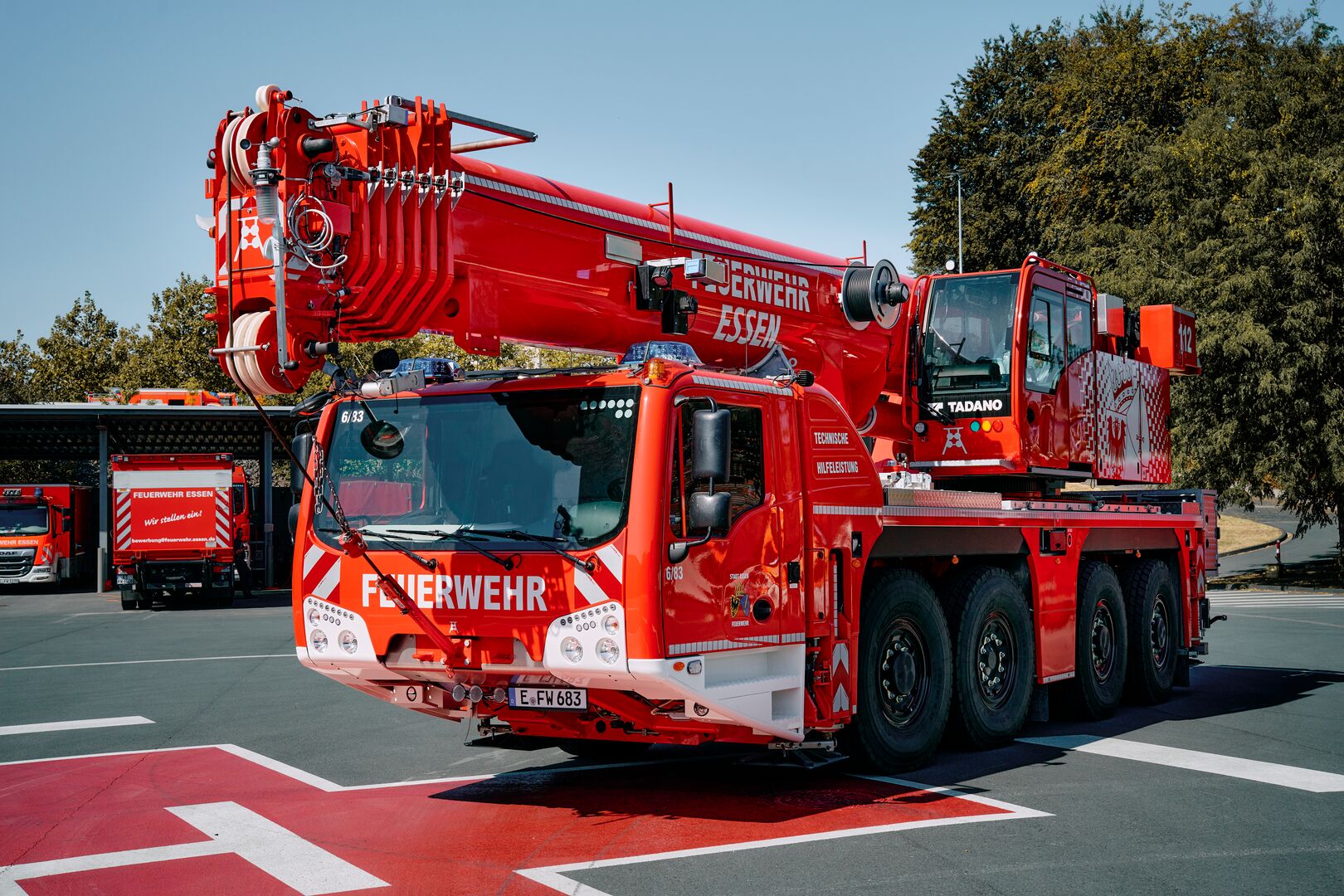
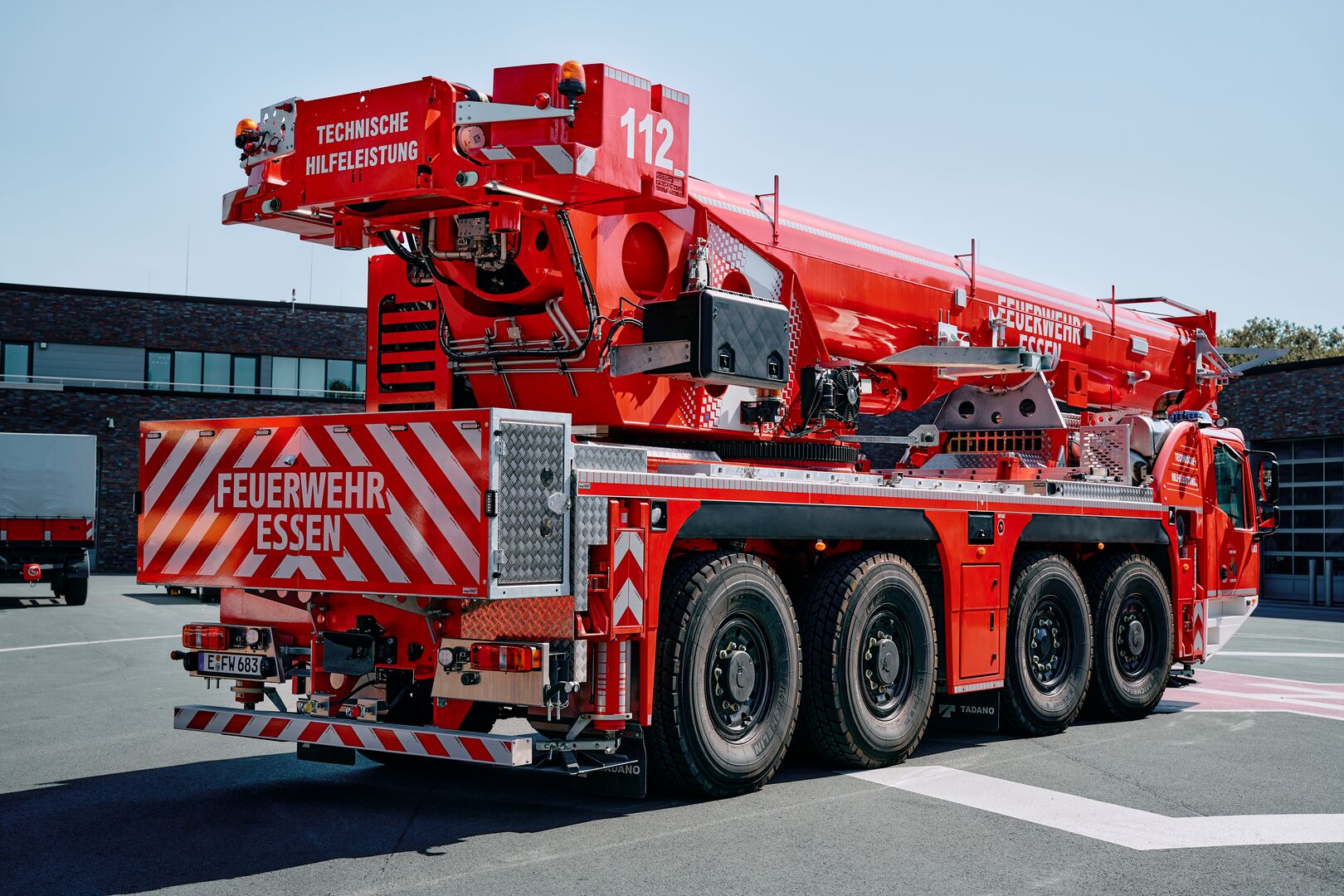
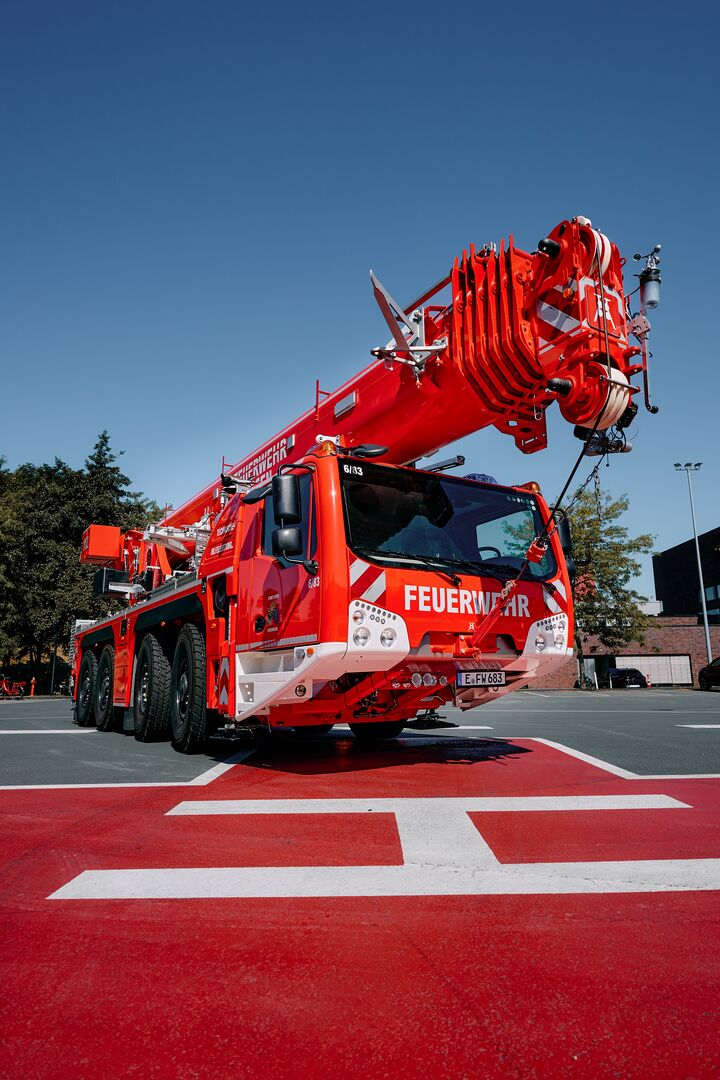
Against this backdrop, the Essen Fire Department has procured a new all terrain crane through a formal tender process. The objective was to identify a unit capable of meeting the diverse operational requirements as comprehensively as possible while remaining economical to operate. Ultimately, the Tadano AC 4.080-1 was selected, as it best fulfilled the defined criteria overall. Key deciding factors included its operational flexibility, its adaptability to varying deployment conditions, and the balanced ratio between its performance capabilities and the effort required for fire-service-specific modifications.
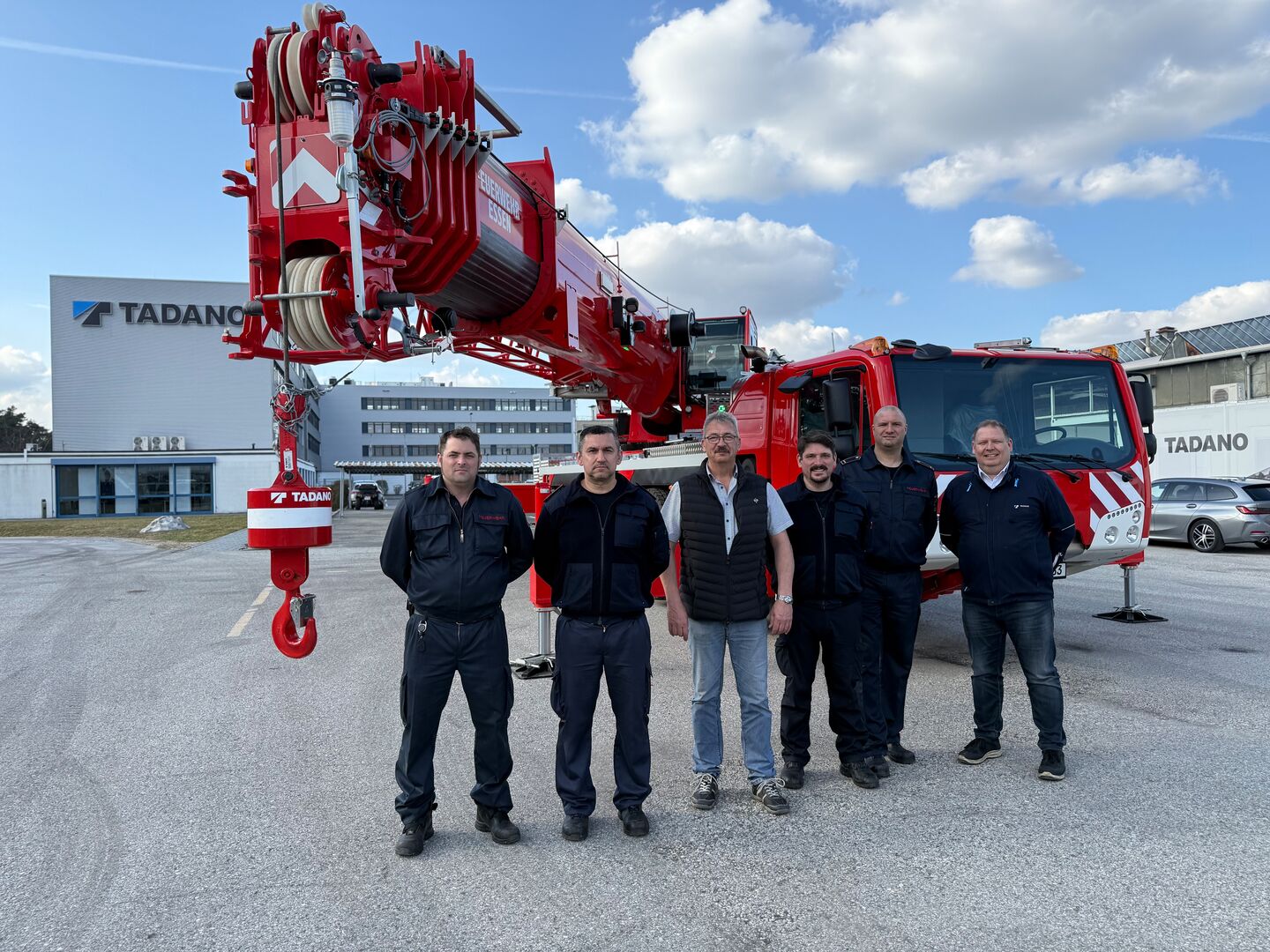
The official handover of the vehicle took place at the Tadano facility in Lauf, overseen by Sales Manager Helge Prüfer.
Going forward, the crane will be deployed primarily in complex rescue operations. These include rescuing individuals across significant distances or over obstacles — a common scenario given the typical rows of buildings found in Essen — as well as missions involving heavy lifting requirements, such as those utilizing specialized rescue baskets. Furthermore, the vehicle supports technical assistance operations, for instance, lifting heavy objects or handling situations where conventional heavy-duty rescue cranes reach their operational limits. The crane also significantly expands operational capabilities in hazard mitigation scenarios, such as those involving trapped individuals.
Technical Advantages for Urban Operational Conditions
A key advantage within an urban environment is the crane’s ability to travel with an axle load of just 10 tonnes when required. As a result, routes subject to specific weight restrictions can be utilized without the need for detours. Combined with its compact design, particularly its vehicle width of 2.55 meters, the AC 4.080-1 is ideally suited for operations in confined urban spaces.
Technically, the crane features a 60-meter main boom as well as a 16-meter luffing extension, enabling the execution of even complex rescue scenarios over considerable distances. Furthermore, the asymmetrical outrigger system allows the vehicle to be optimally positioned, even in extremely tight spaces. Each outrigger can be individually and stepless adjusted — a distinct advantage, particularly in densely built-up residential areas.
Following the final installation of fire-service-specific equipment and vehicle lettering, comprehensive training will be provided for the operating personnel. The crane will then officially enter service.